
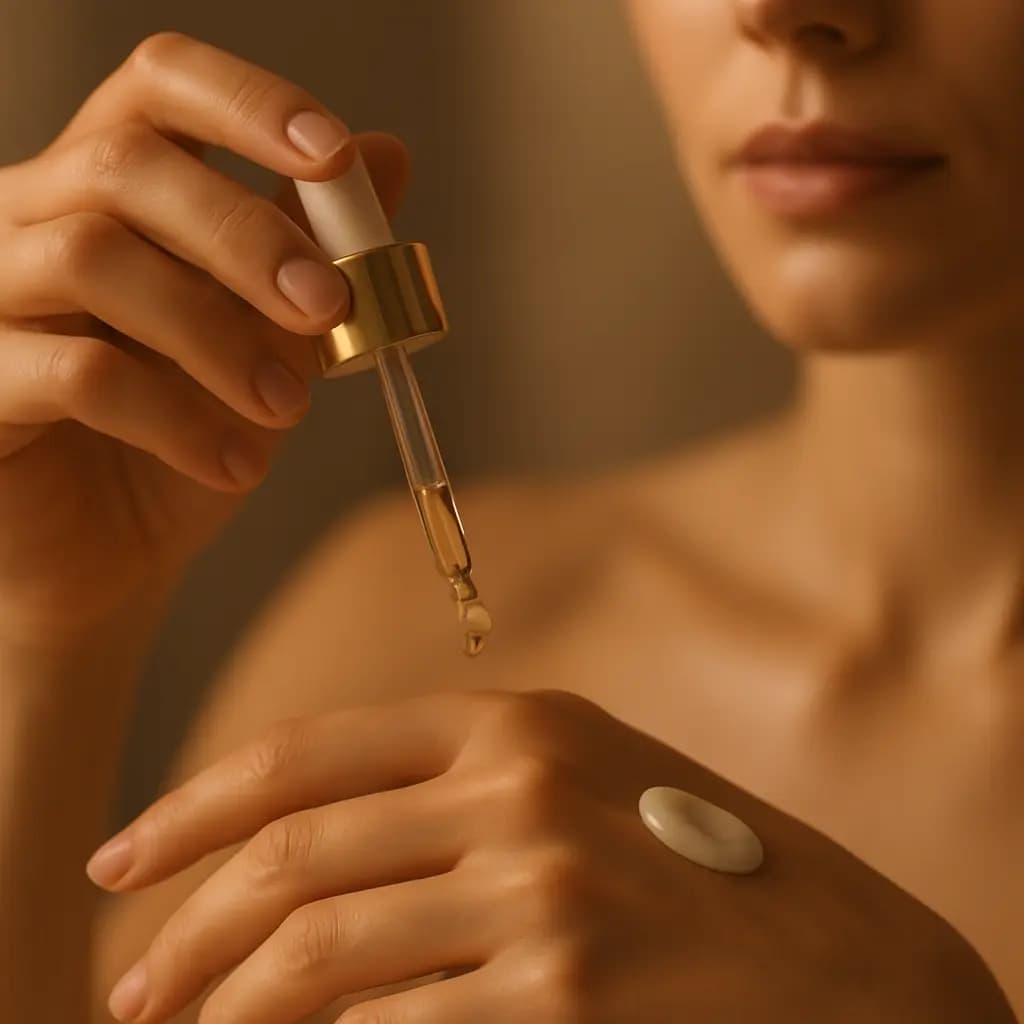
There's a specific kind of frustration in reaching for concealer every single morning for the same one or two spots that never seem to fade, no matter how many "brightening" products you've tried. It's not that those products don't work at all — it's usually that dark spots need more than one approach at once to genuinely fade, and most routines are missing at least one piece of that puzzle.
Why dark spots form in the first place
Hyperpigmentation happens when skin produces excess melanin in response to a trigger — most commonly UV exposure, but also post-inflammatory marks left behind after acne heals, and hormonal changes that can trigger melasma, a specific pattern of pigmentation often on the cheeks and forehead. Each cause responds slightly differently to treatment, which is part of why a generic approach often underperforms.
The three pieces that actually work together
Daily SPF, without exception. This is the single most important step and the one most commonly skipped. Every bit of unprotected sun exposure actively feeds existing dark spots and creates new ones — no brightening product can outpace this. The Beauty of Joseon Relief Sun is a lightweight daily option that makes this habit easier to maintain.
Brightening actives used consistently. The Numbuzin Glutathione Vitamin Concentrated Serum and Medicube Kojic Acid Turmeric Brightening Serum target pigmentation directly, while Dr. Althea Vitamin C Serum supports overall tone evenness and antioxidant protection.
A targeted in-clinic treatment. For spots that have resisted at-home care, Madina's specialized acne & spot treatment facial addresses pigmentation with professional-strength methods that go beyond what daily products alone can achieve.
How long it realistically takes
Dark spots are slow to form and slow to fade — skin cell turnover takes weeks, and visible pigmentation change typically requires eight to twelve weeks of consistent care before a meaningful difference appears. Anyone promising an overnight fix for hyperpigmentation is overpromising; genuine improvement is a gradual, cumulative process.
A note on layering brightening products correctly
Combining too many active ingredients at once — multiple acids, high-strength Vitamin C, and exfoliants all in the same routine — often backfires, causing irritation that can actually worsen post-inflammatory pigmentation rather than improve it. A simpler, more consistent routine tends to outperform an aggressive, overloaded one.
FAQ
Can dark spots fade completely, or will they always leave a trace? Many spots fade significantly or disappear entirely with consistent care, though very deep or long-standing pigmentation may lighten substantially without fully vanishing.
How long before I see visible improvement? Most people notice a meaningful change after eight to twelve weeks of consistent SPF and brightening product use, with continued improvement over several months.
Is sunscreen really that important if I'm already using brightening products? Yes — without daily SPF, unprotected sun exposure actively works against every brightening product you're using, essentially undoing progress in real time.
Can I use Vitamin C and other actives at the same time? Generally yes, but layering too many strong actives at once can cause irritation — a specialist can help you build a routine that avoids overloading your skin.
Does the acne & spot treatment facial hurt? No — it is a professional treatment designed to be comfortable, targeting pigmentation and congestion without aggressive or invasive techniques.
Book a brightening facial → Facial & Skin Care
Join the Madina Elite Circle
Receive exclusive articles, clinic updates, and special announcements.